


Minnesota Vikings Game Day Jersey Outfit Ideas
Game day dressing is a layering problem before it is a fashion one. Stadiums are colder than the parking lot, warmer than the walk in, and rarely at a temperature that matches what you wore to get there.
Quick Answer
Wear a plain base layer under the jersey, add a jacket that opens over it, and keep the lower half neutral. A stitched jersey works as a mid-layer in cold weather; a lighter style works alone in warm markets.
Key Takeaways
- ▸Wash cold and hang dry to protect stitched numbers.
- ▸Construction matters more than price when you are choosing a jersey.
- ▸Classic home colorways stay relevant across roster changes.
- ▸Measure your chest rather than trusting a t-shirt size.
Quick Facts
- Every team stays in stock across game, replica, legacy, alternate and throwback cuts.
- Availability changes by size, not by team — check the specific size on the product page.
- Big-and-tall lines carry fewer sizes and sell through first once a popular player is in.
- A team-level design outlives a player-specific one through every rebuild.
The Minnesota Vikings Layered Game Day Uniform
Sleeves are the most common failure point in a layered look. A jersey sleeve is cut narrow, and a heavier base layer underneath narrows it further, so the cuff ends up tight around the arm. If the plan is to wear a long sleeve underneath, that has to be accounted for when picking the size, because the jersey will not sit the way it does when worn alone.
Footwear is the piece people treat as an afterthought and it is half the silhouette. Anything in a neutral tone works with any team colorway, and nothing louder than the jersey is needed. The rule is simple: if the shoes introduce a second focal point, the jersey stops being the thing people look at, which defeats the purpose of wearing a team jersey at all.
The base layer should be thin, wicking, and close to the body. Its only jobs are to move sweat away from the skin and to keep the jersey from sitting directly against it. Anything heavier does the job of the middle layer and defeats the purpose. A plain crew or a short-sleeve compression layer is usually enough, and it is invisible once the jersey is on.
Colors should be decided from the outside in, not the inside out. The jersey is the largest block of color in the outfit, so the layers underneath should be quieter or should repeat one of the jersey's own colors. When the base layer is a competing color, the look reads as three separate garments rather than one assembled outfit, which is the fastest way to look unintentional.
| Colorway | What it is | Why fans pick it |
|---|---|---|
| Home | The primary team color fans see most weeks | Safest pick if you do not know a size or a preference |
| Away | Usually white or a light neutral base | Reads cleanest in photos and warm-weather wear |
| Alternate | A secondary color used a few times a season | Stands out in a crowd of home jerseys |
| Throwback | A historical look revived for a modern cut | Favorite of long-time fans and collectors |
| Color Rush | A bold monochrome look built for night games | The most visually distinctive option on the rack |
Which One Should You Pick?
| If this is you | Pick this | Why |
|---|---|---|
| You follow one team and nothing else | Team-level home jersey | Works regardless of which round that team reaches |
| You follow a player, and you know the number | Throwback or legacy cut | Tied to an era, so it stays relevant after a trade |
| You are buying for someone else | Game cut, home colourway | Deepest size range, easiest to exchange |
| You already own their current jersey | Alternate cut, same team | More variety from a team you already support |
| You are hard to fit for | Big and tall, order first | Thinnest line; ordering later means fewer choices |
Start with a plain long-sleeve base in a neutral color. It absorbs moisture, keeps the jersey off bare skin, and stops the mesh from clinging, which is the difference between a jersey that hangs correctly and one that bunches under the arms.
Jerseys are cut wider through the chest and longer in the body than a standard t-shirt of the same labelled size. If you normally wear a medium t-shirt, a medium jersey will fit, but with noticeably more room under the arms, which is exactly the space you want for layering.
Collectors tend to care less about the current depth chart and more about construction details that survive a decade of storage: reinforced shoulder seams, layered twill, and a nameplate sewn rather than pressed. Those are the things that still look right when the jersey comes out of the closet years later.
Minnesota Vikings Game Day Cold: Layers, Gloves and Helmets

A scarf is more useful than it looks in cold conditions because it closes the gap between the collar and the outer layer, which is exactly where a jersey leaves you exposed. It also solves the neck question in a way a hood does not: a hood has to come off indoors, whereas a scarf can be unwound in one motion when you move from outside to a concourse or a bar.
Jerseys that are worn in cold conditions need slightly more attention than in any other weather, because sweat from a warm indoor room can be trapped against the body and then cooled to the skin on the way back out. A base layer that wicks is the mitigation. It costs far less than replacing a stiff jersey, and it is the reason a layered outfit stays comfortable for the whole game rather than the first twenty minutes.
The three-zone approach is the standard answer: a wicking base layer, an insulating middle layer, and a wind-resistant outer shell. The base moves sweat, the middle holds warmth, and the outer stops the wind. Removing the outer when you are moving and putting it back when you sit is the mechanism, which is why a shell you can stuff into a pocket is worth more than a bulkier coat you cannot take off.
Seating location matters more than most clothing choices. An end-zone seat in the open is colder than a lower-bowl seat with more of the crowd around it, and a covered concourse changes the calculation entirely. If the ticket is a premium one in a sheltered area, the requirement drops, and buying a full cold-weather kit for a covered seat is money spent for nothing.
For NFC North, a division where late-season games are a real test of how well a jersey layers. In practice that means favouring a heavier stitched jersey as the mid-layer, with a windproof shell over it and a base layer that wicks rather than traps.
The Minnesota Vikings colorway palette is deliberately narrow, and that is a feature rather than a limitation. Because the palette is stable, one jersey works across a decade of photos, which is exactly what people want from a piece they plan to keep rather than replace.
The quickest way to judge construction without a spec sheet is to look at the inside of the jersey. A stitched number leaves a second layer of thread behind the fabric, while a printed number leaves only a faint outline. Look behind the shoulder seam and the evidence is usually obvious within seconds.
Heat is the enemy, not water. A cold wash lifts everyday soil without stressing the fabric, while a hot dryer cycle softens the bond layer under printed numbers and pulls polyester out of shape. Air drying costs an extra hour and buys years of wear.
Every fan base develops its own way of wearing a jersey. Some treat it as a shirt, some as a jacket substitute, and some as a display piece. The Minnesota Vikings range covers all three habits, which is why the same store can serve a tailgate crowd and a collector without splitting into separate products.


Minnesota Vikings Jersey Styling Beyond the Stadium
Vintage tees and denim read as a period look that suits the jersey, but the fit has to be right or the whole thing collapses into costume. A straight-leg or wide denim with a tucked or shortened top creates proportion; a baggy fit on both halves does not. The rule is that one half of the outfit should be fitted, and if the jersey is the oversized half, everything under and around it should be clean and close.
Beyond the stadium, a jersey works best where a team shirt would genuinely be worn: a barbecue, a tailgate, a game watch with friends, a weekend at home. In settings that have no relationship to the sport, a plain team-colored top is the safer choice. Wearing a numbered jersey in a context with no sporting occasion is what makes people read it as a costume, and no amount of styling fixes that.
The safest non-stadium use is the most boring one: the jersey with jeans, boots, and a plain outer layer. Nothing else needs to match. A neutral trouser and a neutral shoe are enough to make a jersey look like a garment rather than a uniform, and they work with any team, any era, and any colorway, which is exactly what makes them the right default.
Layering a jersey over a hoodie works best when the hoodie is a plain color already present in the uniform, because then the two garments read as one deliberate color story. When the hoodie is a separate color, the effect is a stripe across the chest that splits the jersey in half and hides the name. This is the most reliable layering combination and also the easiest to get wrong by accident.
Worn over a plain t-shirt with neutral trousers, a jersey reads as ordinary casual wear rather than fan gear. The number does the talking, and everything else stays quiet enough to work in a coffee shop or an airport.
Storage matters as much as the jersey itself. Fold along the shoulders rather than creasing the numbers, keep it out of direct sunlight, and avoid vacuum bags that compress stitched twill into permanent ridges. A breathable garment bag does the job without adding pressure.
Fan gear is social equipment. A jersey gives strangers an opening line in a parking lot, which is why the most-worn jerseys in any stadium are the ones carrying the most recognisable colors rather than the most expensive construction.
Polyester takes dye deeply, which is why team colorways stay saturated across seasons. The trade-off is that the same fibre holds odour, so a jersey benefits from being aired out overnight rather than thrown straight into a laundry basket after every wear.
A second jersey in a different colorway extends the useful life of the first. Rotating two jerseys halves the wash cycles each one sees, and it gives you an option for warm-weather games when the heavier fabric stays in the closet anyway.
Stitched numbers and letters are built from layers of twill that are sewn through the fabric rather than bonded to the surface. That construction costs more and adds weight, which is why a stitched jersey feels denser in the hand and holds its shape across a long season instead of softening at the shoulders after a few washes.
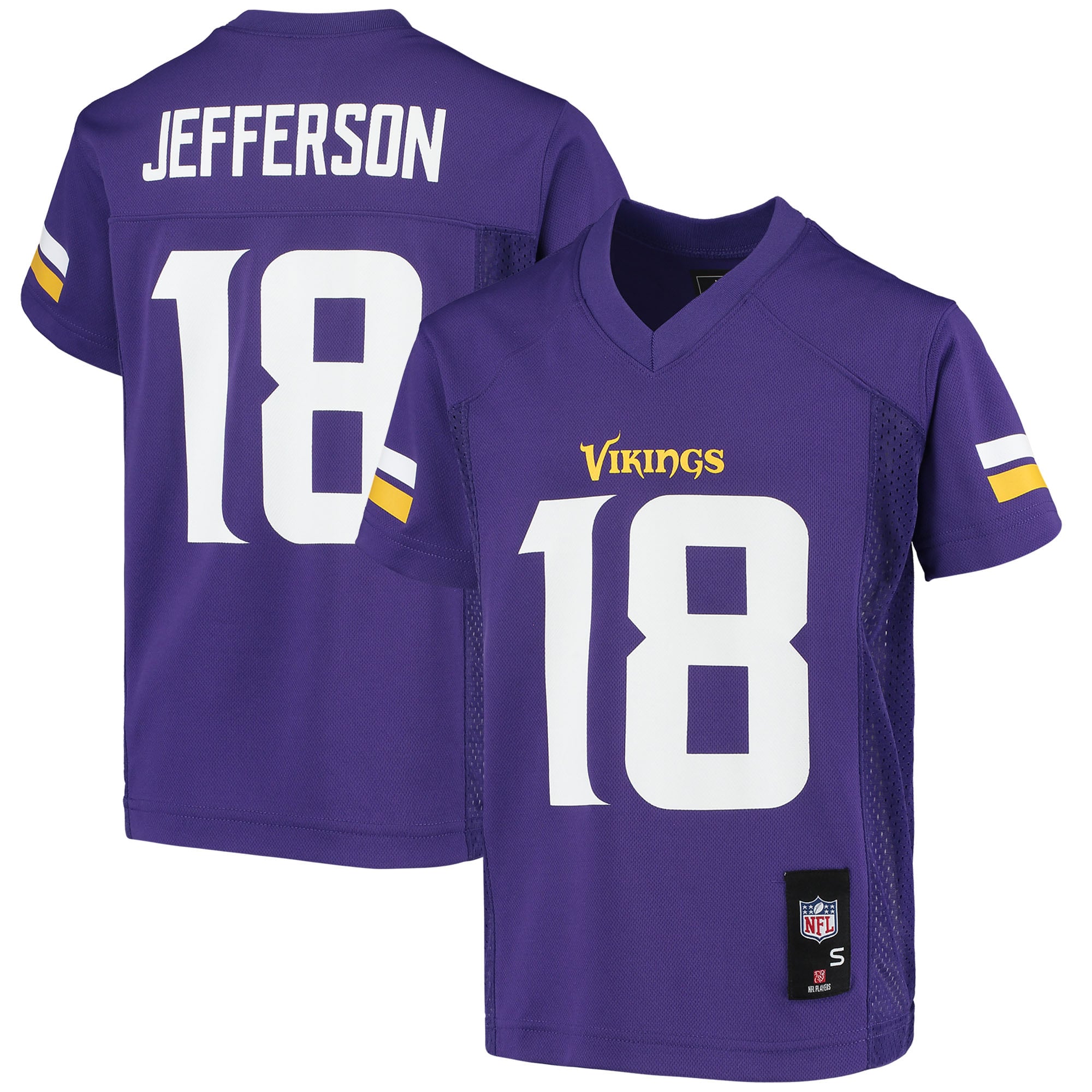
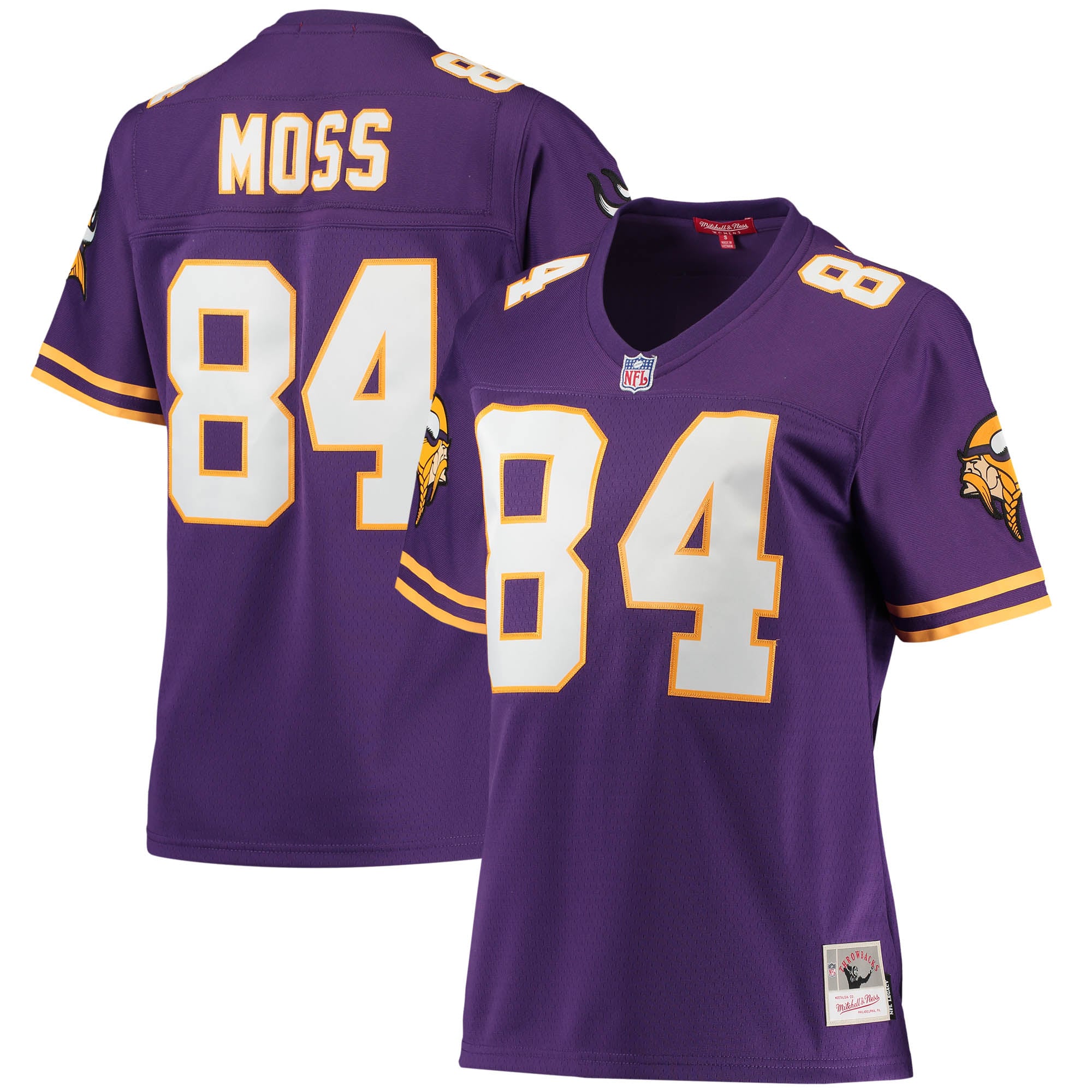
Featured Stitched Jerseys


Frequently Asked Questions
What do you wear under a football jersey?
Can you wear a jersey to a non-game event?
What colors pair best with a team jersey?
Is a heavier jersey better for cold games?
Should a jersey be tucked or untucked?
Keep Reading
- NFL Jersey Buying Guide: Sizing, Care, Tiers and Team Guides
- Chicago Bears Jersey Sizing Guide: Fit Charts, Measurements &…
- Minnesota Vikings Jerseys
- NFC North Hub
- Shop All Jerseys
Common Mistakes Worth Avoiding
- Buying the current cut for a specific era look
Period cuts differ in shoulder, number weight and collar. Colour alone will not do it. - Assuming a throwback will fit like the jersey you own now
It is cut differently rather than sized differently. Check the product page. - Sizing down because a structured cut feels tight
Sizing up is the more recoverable mistake, especially if you layer over it. - Buying a name before the team is settled
Player-specific designs lose relevance the moment that player moves.
Build Your Rotation
Classic colorways, stitched construction, sizes for the whole family.
Browse NFL JerseysReviewed by Pro Football Jersey Vault · Last updated October 06, 2026
